The Complete Guide to Cleaning Science

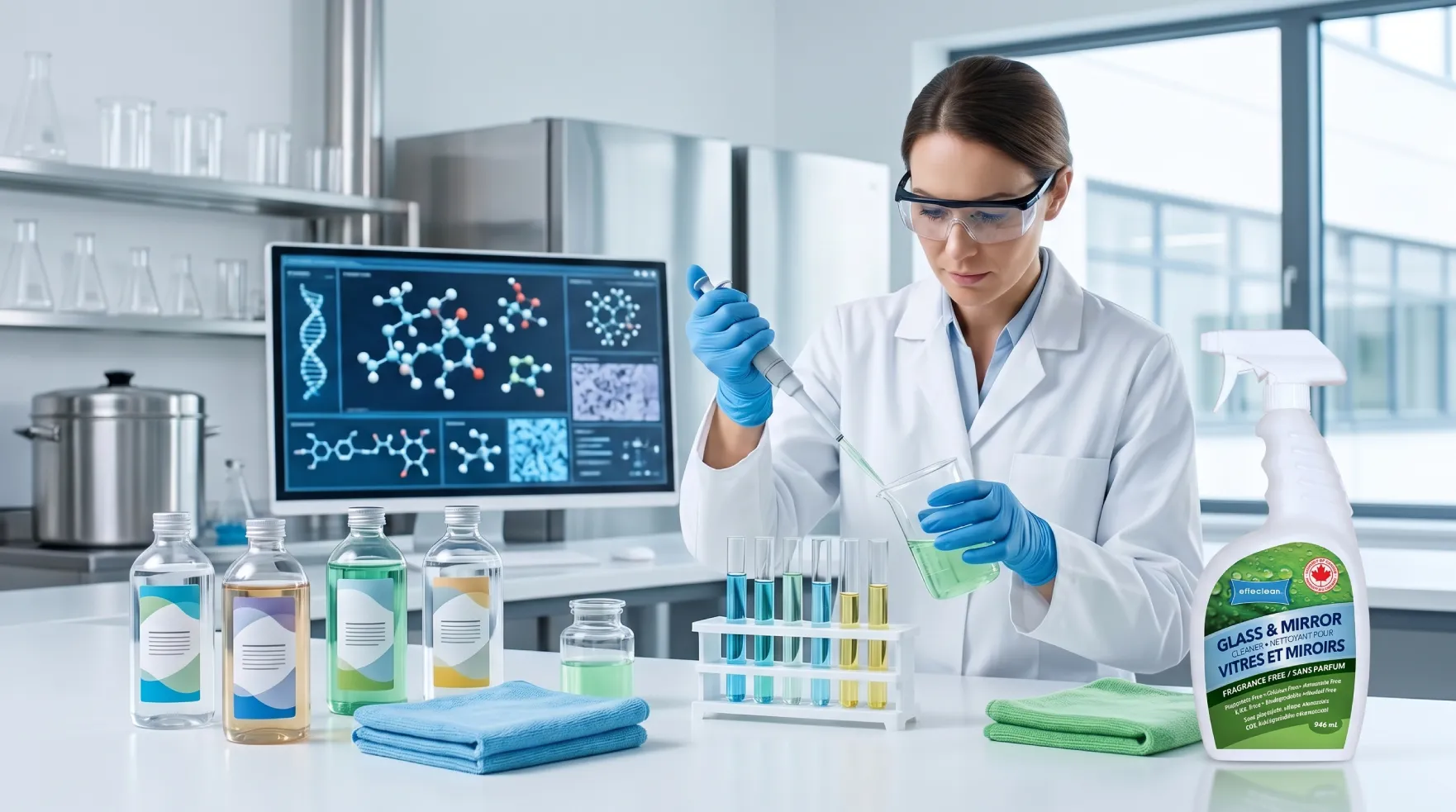
Cleaning looks simple. Spray a product. Wipe a surface. Rinse. Done.
But underneath that apparently simple process is a surprisingly sophisticated combination of chemistry, physics, materials science, and mechanical action.
Why does water alone remove some dirt but struggle with grease? Why does an acidic cleaner work well on mineral deposits but perform poorly against oily soil? Why can one cleaner leave a streak-free finish while another leaves residue? Why does scrubbing sometimes improve cleaning dramatically, while at other times it damages the surface?
The answers come from cleaning science.
Understanding that science changes the way you choose cleaning products, use them, formulate them, and evaluate their performance.
This guide explains how cleaning works, the fundamentals of cleaning chemistry, the major types of soil, the role of surfactants, solvents, builders, enzymes and other ingredients, and how factors such as time, temperature and mechanical action affect the final result.
The objective isn't simply to make cleaning sound scientific.
It is to make the science useful.
What Is Cleaning Science?
Cleaning science is the study of how unwanted materials are removed from surfaces using chemical, physical and mechanical processes.
A "soil" can be almost anything that doesn't belong on the surface:
- grease
- oil
- food residue
- dust
- mineral deposits
- protein
- starch
- fingerprints
- soap scum
- carbonized material
- microorganisms
- residues from previous cleaning products
Different soils behave differently because they have different chemical and physical properties.
That means there is no universal cleaning mechanism that works equally well for everything.
A product designed primarily to remove mineral scale, for example, operates differently from a degreaser designed to remove oils.
This is one of the most important principles in cleaning:
Effective cleaning starts with understanding the soil, the surface and the cleaning conditions.
The formulation must then provide the appropriate chemistry and physical action to separate the soil from the surface and prevent it from redepositing.
How Does Cleaning Actually Work?
At its simplest, cleaning involves four fundamental steps:
- The cleaning solution reaches the soil
- The soil is loosened, dissolved, emulsified or otherwise disrupted
- The soil is separated from the surface
- The removed soil is carried away
This sounds straightforward, but each stage can involve different chemistry.
For example, imagine cooking oil on a countertop.
Water by itself has difficulty removing the oil because water and oil have very different chemical characteristics.
Introduce an appropriate surfactant and the situation changes.
The surfactant can reduce water's surface tension, improve wetting, interact with oily material and help keep removed soil dispersed in the cleaning solution.
Add mechanical action from wiping or scrubbing, and the soil can be physically loosened.
Allow the product sufficient contact time, and the chemistry has more opportunity to work.
This is why cleaning is not simply a question of "Which chemical is strongest?"
It is a question of:
Which combination of chemistry, surface, soil and cleaning conditions produces the required result without unnecessarily damaging the surface?
The Four Major Factors That Control Cleaning
A useful way to understand cleaning performance is to look at four interacting factors:
1. Chemistry
The cleaning product provides the chemical action needed to interact with the soil.
Examples include:
- surfactants
- solvents
- acids
- alkalis
- enzymes
- builders
- oxidizing agents
- chelating agents
2. Mechanical Action
Physical energy helps detach soil.
Examples include:
- wiping
- brushing
- scrubbing
- agitation
- spraying
- pressure washing
- machine movement
3. Temperature
Temperature can influence the rate at which certain soils dissolve or cleaning reactions occur.
However, hotter is not automatically better.
Some surfaces, soils and formulations require controlled temperatures, while modern detergents can be formulated to perform effectively at relatively low temperatures.
4. Time
Cleaning chemistry needs sufficient contact time to do its job.
A product that works effectively after several minutes may perform poorly if immediately wiped away.
These factors interact.
If mechanical action is reduced, chemistry or contact time may need to compensate. If temperature is lowered, a longer cleaning cycle or different formulation may be required.
The American Cleaning Institute describes cleaning as an interaction between chemical, mechanical and thermal energy, with time influencing how effectively those factors can work together.
A practical example
Consider cleaning a greasy commercial kitchen floor.
You could potentially improve cleaning by:
- using a more appropriate degreasing chemistry
- allowing sufficient dwell time
- using appropriate agitation
- controlling water temperature
- improving rinsing
The best solution is often not simply increasing chemical strength.
The First Rule of Cleaning Chemistry: Know Your Soil
Before choosing a cleaner, identify what you're trying to remove.
This is where many everyday cleaning mistakes begin.
People often choose products based on labels such as:
"Powerful cleaner"
rather than asking:
"What exactly am I trying to remove?"
Different soils require different approaches.
Common soil categories
| Oily soil | cooking oil, grease, fingerprints | Surfactants, solvents, alkaline chemistry |
| Mineral soil | limescale, calcium deposits | Acidic chemistry |
| Protein soil | food, blood, biological residues | Enzymatic or specialized chemistry |
| Starch soil | food residues, sauces | Enzymes / detergency |
| Particulate soil | dust, dirt, sand | Wetting, suspension, mechanical action |
| Carbonized soil | baked-on food, burnt residues | Specialized chemistry + mechanical action |
| Soap scum | bathroom deposits | Acidic/surfactant systems depending on composition |
| Microbial contamination | bacteria, viruses, fungi | Appropriate cleaning followed by validated antimicrobial treatment where required |
The exact formulation required depends on the soil, surface, concentration, tempera
Why Water Alone Is Not Enough
Water is an excellent cleaning medium.
But it isn't a universal cleaner.
Water has difficulty removing many hydrophobic materials, particularly oils and greases.
It also has a relatively high surface tension, meaning it doesn't always spread across or penetrate a surface as effectively as a properly formulated cleaning solution.
This is where surfactants become important.
Surfactants are surface-active agents that modify the behavior of water, including reducing surface tension and improving wetting. They can also help emulsify and suspend soils so that they can be carried away rather than simply redistributed across the surface.
Surfactants: The Workhorses of Cleaning Chemistry
If you want to understand cleaning science, surfactants are one of the most important concepts to learn.
A surfactant molecule has regions with different affinities for water and other substances.
In simplified terms, one portion interacts favorably with water while another can interact with oily or hydrophobic materials.
This dual behavior helps surfactants perform several important functions.
Wetting
Surfactants help water spread over surfaces rather than remaining in isolated droplets.
Better wetting allows the cleaning solution to reach more of the contaminated surface.
Soil loosening
Surfactants can interact at the boundary between soil and surface, helping weaken the forces holding the soil in place.
Emulsification
Oily material can be dispersed into the water phase rather than remaining as one continuous oil layer.
Suspension and dispersion
Once soil has been removed, the cleaning solution should help keep it dispersed so it doesn't simply settle back onto the surface.
Reduced surface tension
This improves contact between the cleaning solution and the surface.
These functions explain why surfactants are present in a huge range of cleaning products.
What Are Micelles?
One of the most useful concepts for understanding surfactant chemistry is the micelle.
When enough surfactant molecules are present in a solution, they can organize into structures called micelles.
A simplified representation looks like this:
          WATER

   ○ ○ ○ ○ ○ ○ ○
  ○             ○
 ○     OIL       ○
  ○             ○
   ○ ○ ○ ○ ○ ○ ○

     MICELLE
The surfactant molecules arrange themselves so that their water-compatible portions interact with the surrounding water while their water-avoiding portions associate with oily material.
This helps incorporate oily soil into the cleaning solution so it can be removed during rinsing or wiping.
Real cleaning systems are more complicated than this simplified illustration, but the concept is fundamental to understanding detergency.
Not All Surfactants Clean the Same Way
One of the biggest misconceptions about cleaning chemistry is that all surfactants are interchangeable.
They aren't.
Common surfactant classes include:
Anionic surfactants
These carry a negative charge in solution.
They are widely used because many have strong detergency and foaming characteristics.
Nonionic surfactants
These have no formal electrical charge.
Many nonionic surfactants are particularly useful for oily soils and are used in a variety of hard-surface and laundry formulations.
Cationic surfactants
These carry a positive charge.
Certain cationic compounds have specialized applications, including fabric conditioning and antimicrobial formulations.
Amphoteric surfactants
These can exhibit different charge characteristics depending on the surrounding chemical environment.
They are valued in some formulations for their mildness, compatibility and formulation stability.
The choice of surfactant depends on the intended product, soil, surface, pH, water conditions, foaming requirements and other formulation considerations.
What Is pH and Why Does It Matter in Cleaning?
pH is one of the most important variables in cleaning chemistry.
The pH scale describes the acidity or alkalinity of an aqueous solution.
A simplified scale looks like this:
ACIDIC                         NEUTRAL                    ALKALINE

1    2    3    4    5    6    7    8    9    10   11   12   13   14
←──────────────────────→       7       ←────────────────────────────→
The important point isn't simply memorizing the scale.
It's understanding why pH matters.
Different soils respond differently to acidic and alkaline conditions.
Acidic Cleaners
Acidic chemistry is particularly useful for certain mineral-based deposits.
Examples can include:
- limescale
- calcium deposits
- mineral scale
- certain rust-related deposits
- hard-water residues
Acids can react with certain mineral deposits, converting them into forms that are easier to remove.
But acids aren't automatically "stronger cleaners."
They are simply appropriate chemistry for particular cleaning problems.
Using an acidic product on an acid-sensitive surface can cause damage.
For example, calcareous stone such as marble can be vulnerable to acids because the mineral composition itself can react with acidic substances.
This is why soil identification and surface identification must happen together.
Alkaline Cleaners
Alkaline chemistry is often useful for oily and greasy soils.
Depending on the formulation, alkaline ingredients can help:
- loosen grease
- break down certain organic soils
- support surfactant performance
- maintain the chemical environment required by the formulation
In industrial and commercial cleaning, alkaline builders can also contribute to cleaning efficiency by controlling water hardness and maintaining alkalinity.
Again, more alkaline does not automatically mean better.
Highly alkaline chemistry can damage sensitive materials.
The objective is appropriate chemistry, not maximum chemistry.
Builders: The Supporting Players
Surfactants get much of the attention, but cleaning formulations often require additional ingredients to perform properly.
One important group is builders.
Builders can improve cleaning performance by managing hardness minerals such as calcium and magnesium.
Hard water can interfere with surfactant performance.
Builders can address this through mechanisms such as:
- sequestration
- chelation
- precipitation
- ion exchange
They can also contribute alkalinity and help prevent removed soil from redepositing.
Think of a builder as a supporting player that creates better conditions for the primary cleaning chemistry to operate.
Solvents and Their Role in Cleaning
Some soils are difficult to remove using water and surfactants alone.
This is where solvents can become useful.
A solvent is a substance capable of dissolving another substance.
Depending on the formulation, solvents may help with:
- oils
- grease
- adhesive residues
- certain coatings
- ink
- other organic soils
Solvents also have formulation functions beyond soil removal.
They can influence:
- viscosity
- ingredient solubility
- stability
- evaporation
- product application characteristics
The choice of solvent must consider both cleaning performance and material compatibility.
Enzymes: Cleaning Through Biology
Enzymatic cleaning is one of the most interesting areas of modern cleaning chemistry.
Enzymes are biological catalysts.
Different enzymes target different types of organic material.
Examples include:
Proteases
Help break down protein-based soils.
Amylases
Target starch-based soils.
Lipases
Target fats and oils.
This makes enzymatic formulations particularly interesting when the soil has a specific biological or organic composition.
The important lesson is:
A cleaning product doesn't necessarily need to chemically attack everything. It can use highly targeted biological activity to break down specific soils.
ACI also identifies enzymes as active ingredients that can target organic stains such as food and biological residues.
Oxidation and Bleaching Chemistry
Some stains aren't simply sitting on a surface waiting to be wiped away.
Their molecules may be chemically responsible for their visible color.
Oxidizing agents can alter those molecules and reduce or eliminate their color.
EPA defines a bleaching agent as a chemical that acts through oxidation to break down stains and remove color.
But bleaching and cleaning are not identical processes.
A product may remove the visible color of a stain without completely removing all of the underlying material.
This distinction matters in professional cleaning.
Stain removal, soil removal, disinfection and bleaching are different objectives.
Cleaning vs. Sanitizing vs. Disinfecting
These terms are often used interchangeably in everyday conversation, but they shouldn't be.
Cleaning
Primarily means removing unwanted material such as dirt, grease and soil from a surface.
Sanitizing
Generally refers to reducing microorganisms to a specified level under defined conditions.
Disinfecting
Refers to using an appropriate antimicrobial process or product to destroy or inactivate specified microorganisms under defined conditions.
A surface can look perfectly clean without necessarily being disinfected.
Conversely, a disinfectant does not necessarily replace the need for ordinary soil removal.
This distinction is especially important in:
- healthcare environments
- food-service environments
- childcare facilities
- commercial buildings
- laboratories
- public facilities
The appropriate process depends on the intended hygiene outcome and applicable product directions and regulations.
Mechanical Action: Why Scrubbing Works
Chemistry is only half of the story.
Physical action matters enormously.
Consider a dried food deposit on a countertop.
A cleaning solution may soften or weaken the deposit, but wiping or scrubbing supplies the physical energy required to detach it.
Mechanical action includes:
- wiping
- brushing
- scrubbing
- agitation
- spraying
- pressure
- machine movement
This is one reason professional cleaning equipment can dramatically change performance even when the chemical product remains the same.
Contact Time: The Often-Ignored Cleaning Variable
One of the most common practical mistakes is:
Spray → immediately wipe.
Sometimes that's exactly what the product instructions require.
Sometimes it isn't.
If a formulation requires contact time to loosen soil or achieve a particular antimicrobial claim, wiping it away immediately may prevent the product from achieving its intended performance.
Contact time depends on:
- product formulation
- soil
- surface
- temperature
- concentration
- intended cleaning objective
The correct procedure is always the one specified for the particular product and application.
Temperature: Does Hotter Always Mean Cleaner?
Not necessarily.
Temperature can influence:
- reaction rates
- dissolution
- viscosity
- grease behavior
- soil removal
- enzyme activity
- product performance
But excessive heat can also:
- damage surfaces
- accelerate undesirable reactions
- affect product stability
- create worker-safety hazards
Modern formulations can also be engineered for effective performance at lower temperatures.
This is one reason temperature should be treated as a controlled cleaning variable, rather than simply "the hotter, the better."
Water Quality: The Hidden Variable in Cleaning
Water isn't chemically identical everywhere.
One important difference is water hardness.
Hard water contains higher concentrations of minerals such as calcium and magnesium.
These minerals can interfere with some cleaning processes and contribute to deposits.
That's why formulation scientists pay attention to water chemistry.
The same cleaner can behave differently under different water conditions.
This is particularly relevant in:
- laundry
- dishwashing
- industrial cleaning
- commercial housekeeping
- floor care
- automated cleaning systems
Builders and other formulation components can help manage these effects.
Surface Compatibility: The Other Half of the Equation
A cleaner isn't successful if it removes the dirt but damages the surface.
Every cleaning decision should therefore consider two things:
What is the soil?
and
What is the substrate?
Common substrates include:
- stainless steel
- aluminum
- glass
- ceramic
- porcelain
- natural stone
- plastics
- painted surfaces
- wood
- finished flooring
- textiles
- rubber
- leather
A chemistry that is excellent for one surface can be inappropriate for another.
For example, an acidic cleaner may be effective against mineral deposits but unsuitable for acid-sensitive stone.
Similarly, aggressive solvents may remove adhesive residue while also damaging plastics, coatings or finishes.
Professional cleaning is therefore a balance between:
soil removal + surface preservation.
Why Residue Happens After Cleaning
A surface can look clean immediately after wiping and still develop a dull, sticky or streaky appearance later.
Common causes include:
- excessive product concentration
- insufficient rinsing
- incompatible product chemistry
- hard-water minerals
- surfactant residue
- polymer or wax buildup
- repeated use of the wrong cleaner
- dirty cleaning tools
- soil redeposition
This is another reason that more product isn't necessarily better.
A higher concentration may sometimes improve cleaning, but beyond the formulation's intended use level it can create additional problems.
Always follow the product's dilution and application instructions.
The Difference Between Cleaning and "Moving Dirt Around"
Here's a useful real-world test.
Imagine wiping a greasy table with a damp cloth.
The table appears cleaner.
But where did the grease go?
If the cloth isn't cleaned properly and the soil isn't captured or removed, you may simply have redistributed it.
Effective cleaning therefore involves more than detachment.
The soil must ultimately be removed from the system.
This can happen through:
- rinsing
- extraction
- wiping with a clean absorbent material
- vacuuming
- filtration
- drainage
- controlled waste removal
This principle becomes particularly important in commercial and industrial cleaning.
Why Foam Doesn't Automatically Mean Better Cleaning
Consumers often associate abundant foam with cleaning power.
But foam and cleaning performance are not the same thing.
Foam is influenced by surfactant type, concentration, water conditions, mechanical action and formulation design.
Some cleaning applications actually benefit from low-foam formulations.
For example, automatic machines may require controlled foaming because excessive foam can interfere with equipment operation.
Therefore:
More foam does not automatically mean more cleaning.
The formulation should produce the physical behavior required by the application.
"Natural" Does Not Automatically Mean "Effective"
This is an increasingly important issue in modern cleaning.
The terms:
- natural
- plant-based
- green
- eco-friendly
- biodegradable
- non-toxic
describe different characteristics and should not automatically be treated as synonyms.
A cleaning ingredient can have a renewable or plant-derived feedstock and still require sophisticated chemical processing before it becomes a useful cleaning ingredient.
ACI notes that surfactants can originate from petrochemical or oleochemical feedstocks, and that both sources can be chemically transformed into useful surfactant molecules.
The more meaningful question is:
Does the finished formulation deliver the required cleaning performance while meeting the relevant safety, environmental and material-compatibility requirements?
That's a much better question than simply asking whether an ingredient sounds "natural."
What Makes a Cleaning Product Well-Formulated?
A high-performing cleaning product isn't simply a bottle containing a strong chemical.
A formulation is a carefully balanced system.
Depending on the product, it may contain:
- water
- surfactants
- builders
- solvents
- pH adjusters
- chelating agents
- enzymes
- preservatives
- fragrances
- colorants
- polymers
- corrosion inhibitors
- specialty additives
Each ingredient needs to perform a defined role.
ACI describes cleaning formulations as carefully balanced combinations of ingredients selected according to what needs to be cleaned and the desired product characteristics.
This is why professional formulation is more complicated than simply mixing ingredients that individually appear to be effective.
The Cleaning Formulation Balance
A useful way to think about formulation is:
             CLEANING PERFORMANCE
                     │
        ┌────────────┼────────────┐
        │            │            │
      SOIL         SURFACE      PROCESS
        │            │            │
     grease       material       time
     mineral      coating       temp.
     protein      finish        agitation
     particulate  sensitivity   dilution
A formulation has to perform inside this entire system.
For example:
High cleaning power + poor surface compatibility = bad product
Excellent surface compatibility + insufficient soil removal = bad product
Strong chemistry + poor rinsability = residue
Good chemistry + wrong dilution = inconsistent results
The objective is balance.
Why Cleaning Products Need Testing
A formulation that works beautifully in a laboratory beaker may not perform identically in the real world.
Real cleaning conditions vary.
Testing can examine things such as:
- soil removal
- surface compatibility
- residue
- streaking
- corrosion
- foaming
- stability
- dilution tolerance
- temperature performance
- storage stability
- packaging compatibility
- user handling
- repeat-use performance
For commercial products, additional testing and regulatory considerations may apply depending on the intended claims and application.
This is one reason reputable cleaning-product development involves more than simply selecting ingredients from a catalog.
Cleaning Science in the Real World
Let's put everything together with several practical examples.
Example 1: Greasy Kitchen Surface
Soil: cooking oil and grease
Useful chemistry: surfactants, appropriate alkaline chemistry and/or solvents depending on the formulation
Mechanical action: wiping or scrubbing
Time: sufficient contact time
Surface: stainless steel, ceramic, coated surface, etc.
The best approach isn't necessarily the strongest degreaser.
It is the product and process that remove the grease efficiently while preserving the surface.
Example 2: Bathroom Mineral Scale
Soil: calcium/mineral deposits
Useful chemistry: appropriately formulated acidic cleaner
Mechanical action: wiping or agitation
Surface: must be checked for acid sensitivity
The key principle is matching chemistry to soil.
Example 3: Dried Food Residue
Soil: proteins, starches, fats and other food components
Useful chemistry: detergency and, depending on the formulation, targeted enzymes
Mechanical action: soaking, wiping, brushing or machine action
Time: allowing the soil to soften can dramatically improve removal
Here again, aggressive chemistry isn't necessarily the answer.
Example 4: Commercial Floor Maintenance
Soil: tracked-in dirt, oils, dust and residues
Chemistry: depends on flooring and soil
Mechanical action: mop, scrubber or automated equipment
Water management: important
Residue control: critical
A floor cleaner that removes dirt but leaves a sticky film can create a maintenance problem rather than solving one.
A Practical Cleaning Science Decision Framework
When faced with a difficult cleaning problem, work through these questions.
Step 1 — Identify the soil
Ask:
What exactly am I trying to remove?
Grease?
Mineral scale?
Protein?
Dust?
Adhesive?
Carbon?
Unknown mixture?
Step 2 — Identify the surface
What is underneath the soil?
Glass?
Steel?
Plastic?
Stone?
Paint?
Wood?
Textile?
Floor finish?
Step 3 — Determine the cleaning objective
Are you trying to:
- remove visible soil?
- remove odor?
- remove a stain?
- reduce microorganisms?
- remove mineral deposits?
- degrease?
- restore appearance?
- prepare the surface for another process?
Step 4 — Choose the appropriate chemistry
Consider:
- surfactants
- solvents
- acids
- alkalinity
- enzymes
- oxidizers
- builders
- chelating agents
Step 5 — Control the process
Consider:
- dilution
- temperature
- contact time
- mechanical action
- water quality
- rinsing
Step 6 — Check the result
Don't simply ask:
"Does it look clean?"
Ask:
- Was the soil actually removed?
- Is residue present?
- Was the surface damaged?
- Did the cleaning process create another problem?
- Is additional rinsing required?
- Does the result remain acceptable after drying?
This is the difference between casual cleaning and process-based cleaning.
The Most Common Cleaning Mistakes
1. Using the wrong chemistry
Trying to remove mineral scale with a general degreaser is inefficient.
Trying to remove heavy grease with a weak neutral cleaner may produce the same frustration.
2. Assuming stronger means better
Aggressive chemistry can damage surfaces, finishes and equipment.
3. Ignoring contact time
Wiping a product away before it has had sufficient opportunity to work can reduce performance.
4. Using too much product
Overdosing can create residue and increase cost without proportionally improving results.
5. Ignoring water quality
Hard water can affect cleaning performance and leave deposits.
6. Ignoring mechanical action
Sometimes changing the cleaning method can improve performance more than changing the chemical.
7. Cleaning without identifying the surface
A cleaner should be compatible with the material being cleaned.
8. Confusing appearance with cleanliness
A shiny surface isn't necessarily free of soil or microorganisms.
Cleaning Science and Sustainability
Modern cleaning science isn't only about making products stronger.
It is also about achieving the required cleaning result with fewer resources and less unnecessary environmental burden.
That can involve:
- concentrated formulations
- lower-temperature cleaning
- efficient dilution
- reduced packaging
- biodegradable ingredients where appropriate
- renewable feedstocks
- efficient equipment
- reduced water consumption
- optimized logistics
- longer product life
- appropriate dosing
EPA's Safer Choice program, for example, evaluates ingredient and environmental considerations including surfactants, builders, VOCs and packaging-related criteria for products carrying its label.
But sustainability should not be reduced to one ingredient or one marketing phrase.
The entire product system matters.
Cleaning Science Is Also About Doing More With Less
A good formulation can sometimes reduce the amount of:
- water
- heat
- mechanical effort
- chemical dosage
- cleaning time
required to achieve a particular result.
This is one of the most interesting aspects of formulation science.
The objective isn't necessarily:
Maximum chemical strength.
It is:
Maximum useful cleaning performance under the required conditions.
That distinction matters enormously in commercial and industrial environments where cleaning efficiency affects labor, water, energy, equipment and product costs.
How Cleaning Product Manufacturers Apply Cleaning Science
For a manufacturer, cleaning science begins long before a product reaches a bottle.
A formulation team has to consider:
Target soil
What exactly should the product remove?
Target surface
Where will it be used?
Performance requirements
How quickly must it work?
User environment
Home?
Office?
Restaurant?
Healthcare?
Industrial facility?
Safety requirements
How should users handle it?
Stability
Will the formulation remain stable during storage?
Packaging
Is the container compatible with the formulation?
Environmental considerations
What happens during use and after disposal?
Regulatory requirements
What claims can legally be made for the intended market and application?
This is why professional cleaning-product development is a multidisciplinary process.
Cleaning Science at Effeclean
For Effeclean, this science is particularly relevant because the company's current product positioning combines cleaning performance, environmental responsibility and Canadian manufacturing.
Effeclean states that its products use ingredients derived from renewable sources including vegetable oils and agricultural resources such as corn, soybeans and sugar cane, and positions its formulations around biodegradability and environmentally responsible cleaning.
Its current product range spans household and commercial applications, including products such as an all-purpose cleaner, floor cleaner concentrate and heavy-duty degreaser.
That makes cleaning science more than an educational topic for the brand.
It is the foundation for explaining why a professionally formulated cleaner can be both effective and designed around specific safety, surface and environmental requirements.
For private-brand customers, the same principles become even more important because formulation decisions ultimately affect product performance, positioning, packaging, user experience and market suitability. Effeclean currently offers private-branding services for Canadian retailers and other partners, including low-MOQ options and regulatory-compliant product/packaging support.
Frequently Asked Questions About Cleaning Science
What is cleaning science?
Cleaning science is the study of the chemical, physical and mechanical processes used to remove soils and unwanted materials from surfaces.
It combines chemistry, physics, materials science and practical cleaning processes.
What is cleaning chemistry?
Cleaning chemistry is the application of chemical principles to soil removal.
It includes the behavior and interaction of surfactants, solvents, acids, alkalis, enzymes, builders, oxidizing agents and other ingredients.
How does cleaning work?
Cleaning works through a combination of chemical action, mechanical action, temperature and time.
The chemistry helps loosen, dissolve, emulsify, break down or otherwise detach soil, while physical action helps remove it from the surface.
Why are surfactants important?
Surfactants reduce water's surface tension, improve wetting and help interact with oily and particulate soils. They can also help keep removed soil dispersed in the cleaning solution.
Why does pH matter in cleaning?
Different soils respond differently to acidic and alkaline conditions. pH can therefore influence soil removal, formulation stability, surface compatibility and overall cleaning performance.
Does more cleaning product mean better cleaning?
Not necessarily.
Using more product than the formulation requires can increase residue, cost and chemical exposure without delivering a proportional improvement in cleaning.
Follow the manufacturer's directions for concentration and application.
Does hotter water always clean better?
No.
Temperature can improve certain cleaning processes, but excessive heat can damage surfaces or affect formulation performance. Many modern cleaning products are designed to work effectively under controlled lower-temperature conditions.
What is the difference between cleaning and disinfecting?
Cleaning focuses primarily on removing soil and unwanted material.
Disinfection involves a validated antimicrobial process intended to destroy or inactivate specified microorganisms under defined conditions.
They are related but different objectives.
Why does a clean surface sometimes look streaky?
Streaking can result from excess product, improper dilution, residue, incompatible chemistry, dirty cleaning tools, hard-water deposits or inadequate rinsing.
Why doesn't water remove grease effectively?
Water and many oils have different chemical characteristics, making oil difficult to remove with water alone. Surfactants and other formulation ingredients help bridge this problem by improving wetting and interacting with oily soil.
The Bottom Line
Cleaning is not simply about finding the strongest chemical and applying it to a dirty surface.
Good cleaning is a controlled interaction between chemistry, soil, surface and process.
The most important principles are:
- Identify the soil.
- Identify the surface.
- Choose chemistry appropriate to both.
- Use the correct concentration.
- Allow sufficient contact time where required.
- Use appropriate mechanical action.
- Control temperature when relevant.
- Consider water quality.
- Rinse or remove suspended soil appropriately.
- Evaluate both cleaning performance and surface compatibility.
Once you understand these principles, cleaning products stop looking like mysterious bottles of liquid.
You can begin to understand why they work.
And that is the real value of cleaning science.
Afzal Mustafa
With a passion for both clean code and compelling storytelling, Afzal Mustafa helps brands elevate their digital presence. As an SEO Engineer and Content Writer, he combines his deep technical knowledge as a WordPress specialist with a data-driven approach to content creation. Afzal believes that great content shouldn't just be written—it should be engineered to perform in the modern search landscape.
Comments (0)
Please log in to join the discussion.