

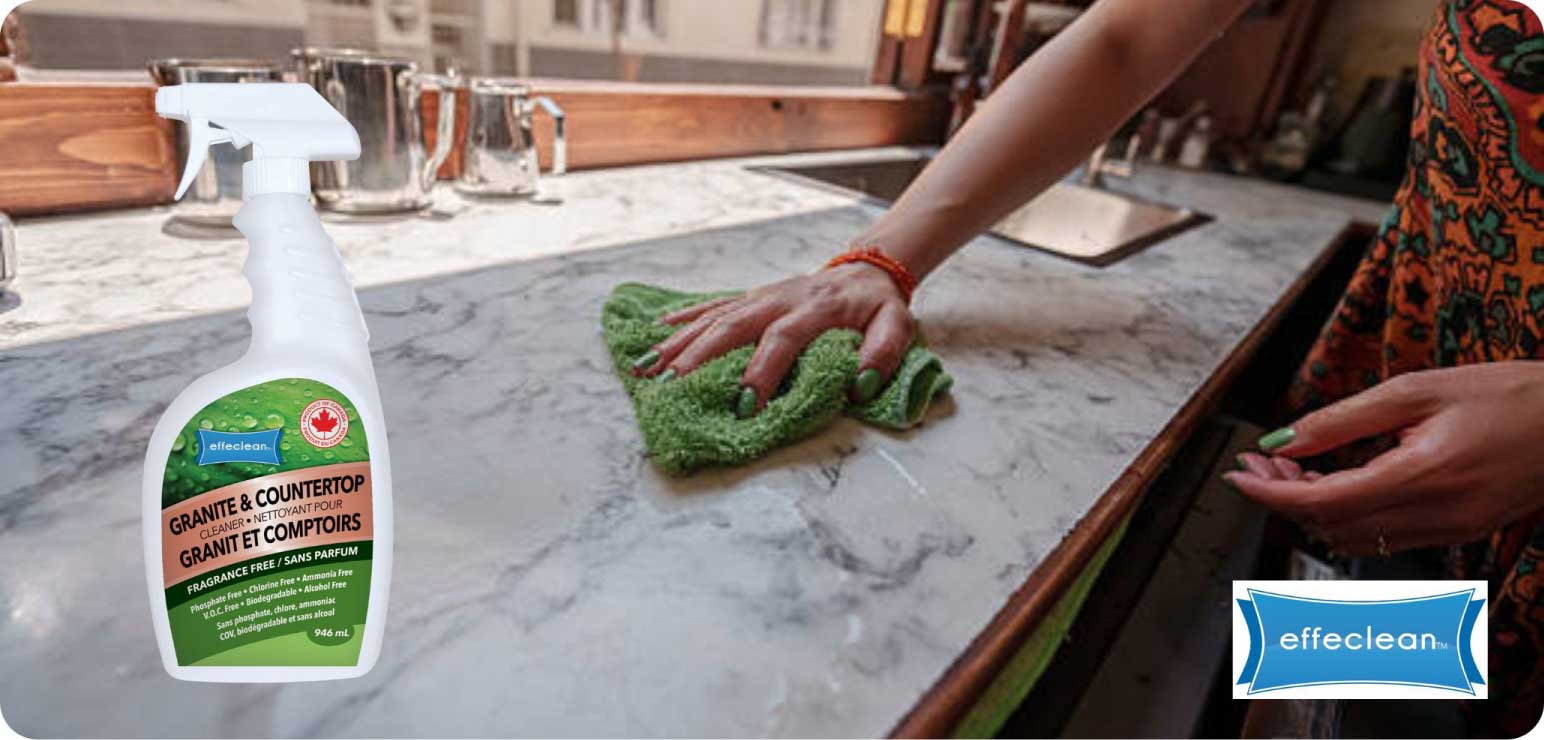
Granite and natural stone countertops are often the “crown jewels” of a kitchen. They represent a significant financial investment and a commitment to aesthetic quality. However, the very thing that makes them beautiful—their natural, porous structure—also makes them vulnerable to common household cleaners.
If you are using whatever multi-purpose spray is under the sink, you might be slowly “etching” away your countertop’s lifespan. In this guide, we’ll explore the modern standard for stone care, following Google’s EEAT (Expertise, Authoritativeness, and Trustworthiness) principles to ensure your home stays both beautiful and safe.
The Science of Stone: Why pH Neutrality Matters
Natural stones like granite, marble, and quartzite are composed of minerals that react chemically with acids. Many traditional “green” cleaners use vinegar (acetic acid) or lemon (citric acid), which are catastrophic for stone. They dissolve the calcium carbonate in the stone or eat through the protective sealant, leading to “etching”—dull spots that cannot be wiped away.
To maintain the integrity of the surface, professionals recommend a pH-neutral formula. This ensures that the cleaner removes grease and grime without disrupting the chemical bond of the stone or its sealer.
What to Avoid (The “Never Use” List)
According to top home-improvement forums, most countertop damage is self-inflicted. Avoid these at all costs:
- Vinegar & Lemon Juice: Acidic; they strip sealers and dull the finish.
- Bleach & Ammonia: Too harsh; they can cause discoloration and weaken the stone’s structure.
- Abrasive Pads: Steel wool or “Magic Erasers” can create micro-scratches that trap bacteria.
- Generic Glass Cleaners: Many contain ammonia or alkalis that leave a foggy film.
The Professional Choice: Effeclean Granite & Countertop Cleaner
For the best granite countertop cleaner, experts look for products that balance performance with safety. Effeclean™ Granite & Countertop Cleaner has emerged as a leader for several reasons:
- Versatility: While formulated for granite, it is equally effective (and safe) for marble, quartz, Corian, ceramic, and porcelain.
- Food Safety: Since counters are where we prep meals, Effeclean’s non-toxic, food-safe formula provides peace of mind that no harmful residues are left behind.
- No-Streak Finish: Unlike dish soaps which often leave a “filmy” buildup, this specialized cleaner evaporates cleanly, leaving a “like-new” shine.
- Eco-Responsibility: It uses plant-derived ingredients, making it safe for homes with children and pets.
Step-by-Step Daily Maintenance Routine
- Clear & Dust: Remove appliances and wipe away loose crumbs with a dry microfiber cloth.
- Spray: Lightly mist the surface with a specialized cleaner like.
- Wipe: Use a clean microfiber cloth in a circular motion.
- Buff Dry: This is the “pro secret.” Use a secondary dry cloth to buff the surface. This prevents water spots and ensures a high-gloss, streak-free shine.
Frequently Ask Questions
1. Can I use vinegar to disinfect my granite?
No. Vinegar is highly acidic and will eventually eat into the stone. For disinfection, use a pH-neutral cleaner specifically designed for stone, or a 70% isopropyl alcohol solution diluted with water.
2. Is dish soap and water enough?
While safe for occasional use, many homeowners on Reddit complain that dish soap leaves a “sticky” film over time that attracts more dirt and dulls the shine.
3. How do I know if I need to reseal my countertops?
Perform the “Water Test.” Place a few drops of water on various spots. If the water still “beads” after 15 minutes, your seal is good. If the stone darkens or absorbs the water, it’s time to reseal.
4. Can I use a Magic Eraser on a tough stain?
Absolutely not. Magic Erasers are micro-abrasives (basically ultra-fine sandpaper) and will buff the factory finish right off your stone, leaving a permanent dull spot.
5. How do I remove a grease stain from granite?
For “absorbed” stains, a poultice of baking soda and water (consistency of peanut butter) applied overnight under plastic wrap can often “draw” the oil out of the stone.
6. Is quartz cleaner the same as granite cleaner?
Generally, yes. While quartz is engineered and less porous, both benefit from pH-neutral, non-abrasive cleaners like Effeclean.
7. Why is my black granite so streaky?
Dark stone shows everything. Streaks are usually caused by residue from previous cleaners or using a cloth that is already damp. Always finish with a dry microfiber buff.
8. Is it safe to prep food directly on the cleaned surface?
Only if you use a cleaner labeled “Food Surface Safe.” Effeclean is specifically designed for this, whereas many industrial cleaners contain chemicals that shouldn’t touch your food.
9. Can hot pans go directly on granite?
While granite is heat-resistant, “thermal shock” can cause cracks, and the heat can damage the sealer. Always use a trivet.
10. How often should I deep clean?
Daily wipe-downs are essential, but a “deep clean” (moving all appliances and treating the entire slab) should be done weekly to prevent grime buildup in corners.